Showing posts with label Wakose Academy. Show all posts

Wednesday, March 19, 2014

Being Unemployable...

What needs to be known about work that isn't taught in school?
It is said these days that 80% of Nigerian graduates are unemployable. Each time this demography is quoted, a whole lot of people scream bloody Mary as to HOW it is possible and if so, WHY? Why are we churning out more "unemployable" graduates from our tertiary institutions?

I mean, why should Tunde Lemo say something as nefarious as that to the dearest people of his country? Wouldn't that be the singular most heart-wrenching to be heard after 16 years of slaving for an education?

A lot of other questions might be asked, questions which truly are daunting and worthy of thought, but the only(?) question that will lead to a solution is this;
What is happening in our schools that isn't preparing attendees for work?
Its worthy to note at this point that the workplace of the nows differ remarkably from what they used to be. Effectively, the skills needed to 'do work' now are a lot different from what was needed some twenty, ten or even five years ago.

The Vice Chancellor, Federal University of Technology, Akure, Prof. Biyi Daramola, believes that Nigerian graduates are unemployable due to the lack of self discipline and commitment to vigorous academic pursuit  but I quite disagree with his stand on the matter. He seems to shelve, skilfully, the responsibility of preparing people for work from the institutions which should, and placing them directly on the ones who should be prepared.

A lot is being said already about how the schools one attend do not matter and how soon, a degree may not be needed to secure a good job, and we all need to respond appropriately to this trend which will soon drive our educational system off the world scene altogether.

Where do we go from here?


The new skills needed to work are the so-called higher order skills of the Bloom's Taxonomy and could be listed basically as the ability to EVALUATE, ANALYZE and CREATE.

These skills are not being taught in our institutions and to make one "employable", one must learn how to think higher than the competition to secure the scarce available spaces.

We need to learn to keep LEARNING!

Monday, March 17, 2014

The Four Keys to Proficiency and You

There are four keys needed to become proficient at any skill: time, action, opportunity and intentionality.

Time: I talked about time a little last week in "I Need A Raise!". It takes a lot of time to master any skill. Most of the "academically gifted" students, professional athletes, and other elite professionals we admire started learning their respective skills at very early ages and they all individually spent thousands of hours learning their skill. A kid that reads books around the house after school is going to be more "academically gifted" than a kid who doesn't get time to study because he has to work.

 
Action: Having all the time in the world will not make us better at any skill unless we channel that time to a particular skill. Action is signing up for swimming lessons if you want to learn how to swim, making friends with people you can learn from, picking up a book on the skill you are trying to learn. Action here refers to the first step that marks the beginning of any journey.


Opportunity: Opportunity refers to the equipment, traits, facilities and personnel that help in skill development. Opportunity is Jumpstart Academy and her volunteers providing mentors to young secondary students. Opportunity is CcHub providing a community where aspiring learners and entrepreneurs can exchange ideas and hone their skills. Opportunity is cyber cafes providing us access to the internet at a time when many of us could not afford it.


Intentionality: Intentionality is the sum total of decisions we (or others) consciously make to improve on the skill we are learning. There comes a time when learning a skill that we have to decide whether to remain "good enough" or "go to the next level." Intentionality is figuring out how much time and what opportunities are needed to "get to the next level" and taking the necessary actions to get there. Intentionality is your parent signing you up for after-school lessons. Intentionality is moving to a location that offers more opportunities and time to get better at your skills. Intentionality is hiring a private tutor, interviewing someone great in your field, saving to get better equipment.


Opportunity is Our Collective Responsibility

While we can individually muster the will-power to find more time, take action and make conscious decisions to improve on a skill, opportunity can be more elusive and harder to come by. Opportunity is transient and is linked to a community's past and current vision.With a growing world population, the rate at which we create opportunities has to outpace our population growth rate or else we are heading for harder times. We all have to take opportunity creation as a challenge. As we spend our time more wisely and intentionally take action and seek opportunities to improve ourselves, let's not forget that opportunity is a two-way street. As we look for opportunities, let's remember that we are someone else's opportunity. It's easy for us to complain about not finding opportunities, but are we creating opportunities for others? Are you helping your daughter with her homework? Do you allow your little brother to play soccer with you and your friends so he can get better? Do you lend/recommend books that changed your life to others? There are some youth close to you that can learn a lot from you. Are you creating a system or supporting an existing system that will help you help them? How many people are lucky you are alive today?

Shout out to all you out there creating opportunities with your time, actions and businesses. And for those of us not yet creating opportunities, let's start today in whatever way we can.

If you are looking for a way to create opportunities in and around Nigeria, Wakose will like to help you help Nigeria. Shoot us an email and we will look to work with you.

Wednesday, March 12, 2014

Teaching vs Learning

The Nigerian Educational system is built largely on the precepts of pedagogy; teaching, the art of teaching and the teaching of teaching, with the aim that if done well, students will have learnt what is being taught.

However, Wikipedia’s definition of learning subtly places the responsibility of learning on the students and not the teacher. It’s known that a teacher’s job is to present information/material/knowledge to a class while the responsibility of “acquiring” the knowledge is the students’.

For instance, I’ve been told that leaving comments on this blog is quite the herculean task, and say I choose to teach the lovers of our nascent blog how to post comments, and I go ahead to recommend a video for it, write a whole post on it, and also bullet-point the process as follows;
  • Write your comment in the box provided
  • In the “Select Profile” field, choose “Name/URL” and wait for a pop-up box
  • In the box, input your name and site (Facebook/Twitter/Blog will do) as appropriate
  • Click on the “Publish” icon and wait for a recaptcha pop-up
  • Fill the recaptcha as appropriate and click on publish
  • Wait to see your posted comment

Now, if you are not interested in learning Jack about posting on Google’s Blogspot, Otunba Gadaffi’s shit won’t be your business. In short, I would have taught but no learning would have occurred.

Do not be deceived though, the aim of education is for learning to occur, but in our institutions, “la cram la pour” is what is reinforced as “learning”.

I wish to expound on LEARNING as opposed to TEACHING in the coming weeks with practical examples of how it has worked for me in our swimming lessons, driving curriculum, class training and other Wakose Learning Platforms.

I will also be blogging on how education has changed in different parts of the world to focus not on teaching, but on LEARNING, the amazing results it is producing and ways Nigeria can adapt these innovations in educational advancements.

Thanks so much for your time.

P.S. Do leave your opinion on whether Nigerian Education allows for learning.


Friday, March 7, 2014

COSTLY ASSUMPTION

Who is the world’s richest man? Does he have needs? If you think he doesn’t have needs, most likely you are mentally zoned to believe that riches answer every question. We all have needs, which are on different levels of priority. Check your priority list. You have needs, from the lowest to the highest scale.

There’s an interesting need that everyone has at every point in time. It’s the need for knowledge, which is utmost. The truth is that learning never ends. When you commune with knowledge in its depth, you would not be stranded in many cases. There is a link between your need for knowledge and your ability to explore. The former, when established, makes room for the later. The need for knowledge is as important as the need to execute.

There is something to note please, no one knows it all. The day you tactically arrive at the conclusion that you know it all, you successfully create a blueprint of failure. Really, execution becomes smooth when your level of knowledge about a subject is sound. First, know it and know it well. Then you can glide into the execution phase. There is however a thin line between knowledge and execution. That thin line is laced with a few thorns, which must be removed. One of such is the costly assumption of mastery.

A large percentage of social media enthusiasts know him. That senior officer performed well until he was asked a question he thought he knew. One of the interviewers asked:

“What is the website of *****?”

In a few seconds, his mind performed a scan, launched into his information technology faculty but fetched something that looked like the answer. Rather than disagree with ego in its fullness, he stuttered, and answered… You know what his answer was! His statements had a spurious correlation. He had an idea but he was unsure of the precise answer. It was a national issue in his country.


Stop assuming mastery. Certainty is key to execution. Why execute what you do not really know? You should go after knowledge in its fullness. It’s a costly assumption to think that you know something, when the best of it exists in your mental faculty as a fuzzy thought. How well do you know? A great barrier to executing is the assumption of mastery. Remove that thorn every time you learn. The assumption of mastery is a costly one. It has the potential to disgrace. It squeezes life out of your execution efforts. Before trying to execute, embrace certainty.

Wednesday, March 5, 2014

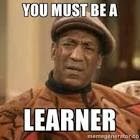
ARE YOU A LEARNER?

How often do you relish the utter sweetness of asking that question after one hapless somebody asks a foolish question?

Questions like:
Was Mandela an actor?
Who is Miley Cyrus and what is twerking?
Is Arsenal topping the EPL table?

I'm like...


And some people’s personal favorite,

                Can Manchester United still win the English Premier League?

LOL

Problem?
It’s almost as if the street usage of the saying has no correlation with its literary meaning. And there lies in the problem…

The harsh truth about it though is that it is the direct opposite, a cynical blow to the sensibility of the ‘victim’, the height of sarcastic indulgence to anyone who usually would have asked out of the mere curiosity of a mind that wants to learn.

16 FUNDAMENTAL HUMAN DRIVES
Some folks believe that there are a few things that serve as motivators for people to do anything, 16 fundamental human drives they say.

What that means is that your choice between going to the stadium to watch a home-team match, reading about a concept your friend mentioned in-conversation, going to the movies with friends, or attending a religious event will largely depend on which of the motivators is dominant for you. 

Curiosity
Curiosity is the drive behind learning, and as children, we all have it at roof-blazing levels, but time, experience and some other factors teach us to gradually tune down. Haven’t you ever wondered how kids learn anything they see so fast? And its like one only grows dumber and not older?

As curiosity dwindles, one's motivation to acquire knowledge also reduces. #CuriosityIsDirectlyProportional ToLearning.

The Point
The “Are you a learner” question wouldn't have been such a big deal except;
  1. The question often always comes as a reply to a perceived “stupid” question.
  2. In doing this, we harshly (and embarrassingly) chide a learner’s ignorance, curiosity and all signs of it.
  3. Depending on how the learner handles it, the act can significantly reduce the number one motivation of learning, curiosity.
  4. A continued bashing and the learner will attribute ignorance and curiosity with bad emotions.
  5. In the end, curiosity may or may not be killed, but will be thoroughly tinted.

A telling example is observed on Twitter. Imagine you came on Twitter and there is a buzz about an issue and everyone seems to be in on the gist, everyone but you. What do you do? Do you throw your ignorance into your timeline? Most unlikely, you’d rather find a friend’s DM to invade, right? Thought as much.

Conclusion
So, what do you do when curiosity takes you over and you are forced to ask questions because you really want to learn and somebody looks to make cheap points from you, and asks;

You should think: “Who isn’t?”

And say: “Shouldn’t I be?” or some other cool abbl to say.

Thanks for your time.

P.S. You my want to pipe down on how often you also make people feel dumb.

Monday, March 3, 2014

There Is No Knowledge That Is Not Power


After our very inspiring talk with Mr Taiwo Akinkunmi, we spent the first 20 minutes of our next Wakose Executive meeting talking about the conversation with Mr. Taiwo. At the end of the meeting, we each got different action items revolving around making learning more affordable, accessible and desirable in and around Nigeria.

The conversation stayed in my mind for a couple of days, and I thought about a sentence many readers around my age will be familiar with "THERE IS NO KNOWLEDGE, THAT IS NOT POWER".

This sentence was popularized in the Ultimate Mortal Kombat 3 game, Back-Back-B anyone? But how true is this statement? To be more specific, how true is this statement in Nigeria?

If I know a hen lays an egg, and egg becomes a chick which grows to what we call chicken and which ends up as chicken peri-peri, and I'm still starving, doesn't that mean there is some knowledge that is not power?

If I know that I can plant maize and it's going to sprout and grow into a full size plant, which gives me a full cob of maize and I'm still living in hunger, doesn't that mean there is some knowledge that is not power?

If we know that "United we stand and divided we fall", yet we only care about ourselves and our families, doesn't that mean that there is some knowledge that is not power?

If we know "A hungry man is an angry man" and yet we expect peace and safety in the midst of hunger, doesn't that mean that there is some knowledge that is not power?

If we know that "an idle man is the devil's workshop" and yet we admonish our youth to despise crime instead of providing meaningful activities for them, doesn't that mean that there is some knowledge that is not power?

If we live in an age where any knowledge we seek is just clicks away and yet we endure solvable problems, doesn't that mean there is some knowledge that is not power?

If we live in a nation where we have lots of engineering graduates and with tons of information available online on harnessing renewable energy resources like wind and solar but yet we have no electrical power, I KNOW there is some knowledge that is not power, at least electrically speaking.


The Way Forward

The way forward is simple. We need to act on what we know. Notice I use the word "simple", not "easy" because it is not going to be easy; in fact, it's going to be long and arduous.

There will be days where you will feel low on energy like I had been last couple of days (I was supposed to turn in this article last week), but in the end, if we join forces and act together, we can make our nation the great nation we KNOW it should be.

Remember the Parable of the Talents? What are you doing with the knowledge and talents accorded to you? Is it one, five or seventy?Are you burying it or putting it work?

Wakose Academy is here to help; if you have any actionable ideas to help create a better nation and need some advice on planning and/or execution, please let us know at wakoseblog@gmail.com and we will strategize with you.

All sabi sabi and no action na just story.